About Nonogram
Use row and column clues to reveal an original pixel picture, one cell at a time.
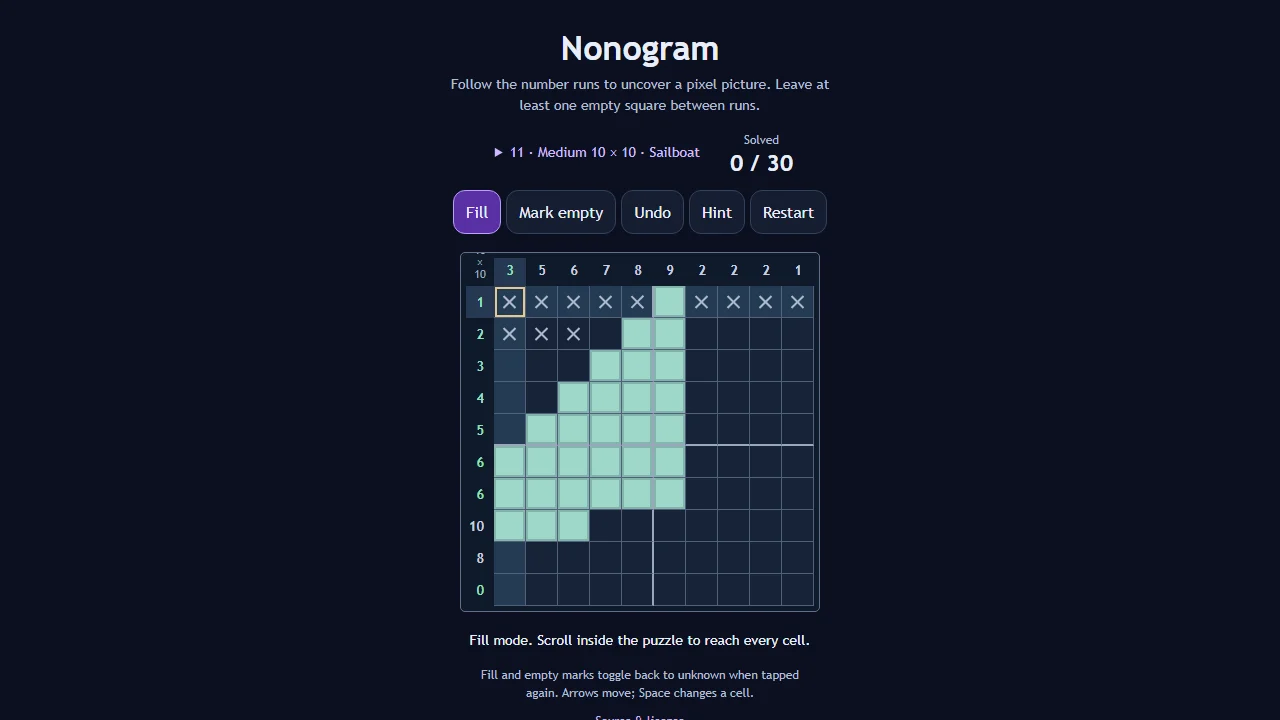
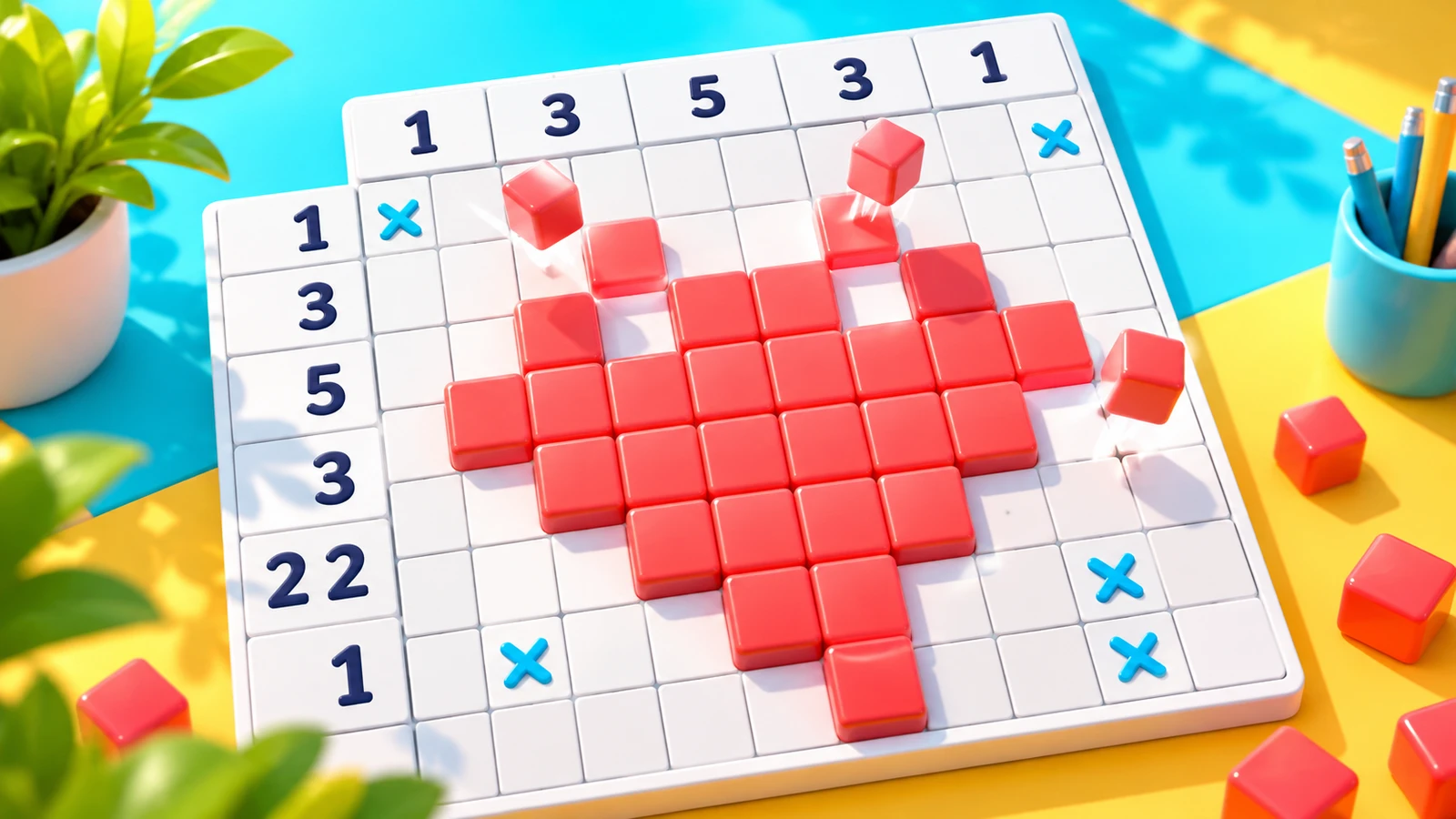
Nonogram is a picture logic puzzle. The numbers beside a row or column describe its groups of filled cells, in order. A clue of 2 1 means two filled cells, at least one empty cell, then one filled cell. Extra empty cells may appear before, between, or after the groups.
Explore 30 original pictures, including a heart, sailboat, rocket, and lantern. Each set of clues has been checked for an exact unique solution. The Easy, Medium, and Hard groups contain 10 pictures each, with 5 × 5, 10 × 10, and 15 × 15 grids respectively; these labels describe board size. Larger pictures keep readable cells and scroll inside the puzzle.
Fill the cells you can prove and mark the ones that must stay empty. Hint changes one cell toward the checked picture, and Undo reverses up to 20 changes. Complete the pattern to reveal its name, then choose another level. Your current marks and completed pictures are saved.
How to play
Read the clue groups for each row and column. Fill cells that belong to the picture and cross out cells that must be empty. Leave at least one empty cell between separate groups. Compare intersecting clues until the completed board matches every row and column. Use a hint if you get stuck.
Controls
Choose Fill or Mark empty, then click or tap cells. Repeating the same mark returns a cell to unknown. Arrow keys move the selected cell; Space or Enter changes it using the current mode. Pan or scroll inside larger pictures. Undo reverses up to 20 changes, Hint corrects one cell, and Restart clears the current picture. Use the numbered picture menu to choose another level.
Tips
Start with full rows or long groups. A large group in a short row often overlaps itself, proving some middle cells. Marking the empty cells around a completed group makes nearby clues easier to read.
Questions about Nonogram
What separates two clue groups?
At least one empty cell separates consecutive groups. The groups must also appear in the same order as their clues.
Must every empty cell be crossed out to finish?
No. You finish when all filled cells match the picture and no extra cell is filled. Crosses help you reason about empty cells, but leaving a correct empty cell unknown is allowed. A zero clue means that entire row or column is empty.